Filament dryer vs vacuum storage bags: which one do you actually need
Quick answer
Use a filament dryer, such as the SUNLU S1 Plus at $37.99, the moment a spool is already printing wet, since only active heat drives out moisture that has been absorbed. Vacuum storage bags, such as a 20-bag kit with a pump at $23.99, cannot reverse that; they only prevent further absorption once the filament is already dry, so they belong in the routine after drying rather than as a fix for a wet spool.

SUNLU Filament Dryer Box 2026 New Upgrade S1 Plus, Black
actively removing moisture from filament that is already printing wet
| Filament dryer | Vacuum storage bags | |
|---|---|---|
| What it actually does | Actively removes moisture already absorbed, using heat | Prevents new moisture from being absorbed |
| Fixes an already-wet spool | Yes | No, it only keeps a dry spool dry going forward |
| Needs power | Yes, it runs a heating element | No, just sealing and a manual or USB pump |
| Best role | Rescuing wet filament and pre-print drying | Long-term storage after the filament is already dry |
| Fastest filament to absorb moisture | Nylon absorbs moisture fastest of common filaments | Nylon absorbs moisture fastest of common filaments |
| Typical price | $37.99 (SUNLU S1 Plus) | $23.99 (20-bag vacuum kit with pump) |
Can vacuum bags dry out filament that is already wet?
No. A vacuum bag's job is to prevent further moisture from getting into the filament by sealing it away from humid air, not to pull moisture back out of plastic that has already absorbed it. Sealing a wet spool into a vacuum bag just locks the existing moisture in with it. If a spool is already printing wet, popping and stringing, the fix is active heat from a dryer, not a tighter seal.
Why does a dryer work when a vacuum bag cannot?
A dryer applies sustained heat to the spool, which is what actually drives absorbed moisture back out of the filament over time. A vacuum bag has no heating element and no mechanism for removing moisture at all, only for keeping fresh humid air away from filament that does not have any moisture problem to begin with. The two tools are solving different problems: one reverses existing damage, the other prevents future damage.
Which filament needs the most attention to moisture?
Nylon absorbs moisture fastest among common 3D printing filaments, which is why it is usually the first material people learn this lesson on. A spool of nylon that has been sitting out, even for a relatively short time, is more likely to need active drying before use than a spool of PLA left out for the same period, simply because nylon pulls in moisture at a faster rate.
Do you need both a dryer and vacuum bags?
For ongoing use, yes. The practical routine is to dry a spool when it needs it, then move it into a vacuum bag or another sealed, desiccant-equipped container to keep it dry until the next time it goes on the printer. Owning only vacuum bags leaves you with no way to fix a spool that has already gone wet, and owning only a dryer means redoing the drying step more often than necessary because nothing is protecting the filament between print sessions.
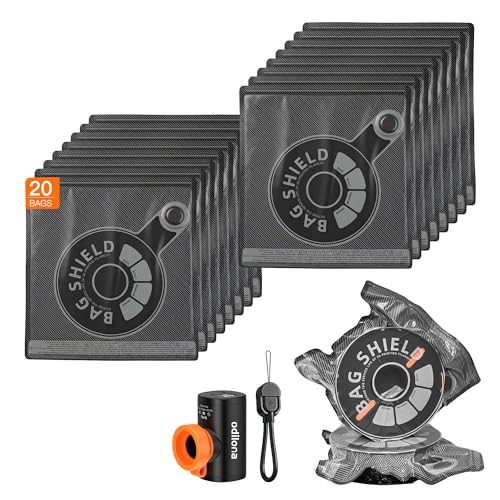
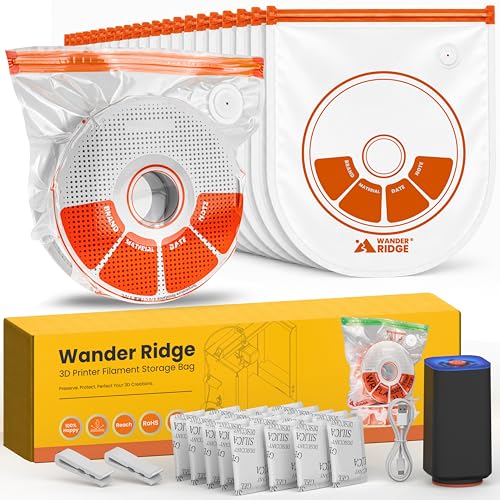
Vacuum storage bags

Vacloong Vacuum-Sealed 3D Printing Filament Kit, 20 Packs Lightproof Storage Bags with Vacuum Pump, Moisture-Proof Bags, Sorting & Storage of PA/DP/PC/PLA/ABS/TPU/ASA/PETG with Desiccant
keeping already-dry filament from absorbing new moisture during storage
Both sides of this comparison
- QIJIAYI
3D Printer Filament Vacuum Storage Bags, 20 Bags, Pump and Desiccants
$26.99 Check pricePrices change often - Polymaker
Polymaker Polydryer Filament Storage Box for 1kg PA Nylon PLA PETG ASA ABS
$27.99 Check pricePrices change often


Common questions
Can I just leave filament in vacuum bags without drying it first?
Only if it is already dry. If a spool has already absorbed moisture, sealing it into a vacuum bag locks that moisture in with it rather than removing it, since bags only prevent further absorption and have no way to reverse what has already happened.
What filament needs the most protection from moisture?
Nylon, which absorbs moisture fastest of common 3D printing filaments. Spools of nylon left exposed to air for even a short period are more likely to need active drying before their next use than most other materials.
Should I dry filament before sealing it in a vacuum bag?
Yes. Drying first and then sealing the spool is what keeps filament dry over the long term, since the bag can only maintain a dry state that already exists rather than create one from a wet spool.
Do I need a dryer if I only print PLA occasionally?
PLA absorbs moisture more slowly than nylon, so occasional printing can often get by on vacuum bag storage alone. A spool that has already been left out and is printing wet still needs active drying though, since a bag cannot reverse moisture that is already there.
Can a dryer replace vacuum bags for storage?
Not really. A dryer removes moisture while it is actively running, but once a spool comes back out into humid air it starts absorbing moisture again, so bags or another sealed container are what actually keep a spool dry between print sessions.