Best laser exhaust fans and ducting
Quick answer
The VIVOSUN D4 4" Inline Fan, rated 195 CFM ($27.89), is the best default exhaust fan for a desktop laser vented through a wall or window, because it moves more air than the 130 CFM entry unit for only about a dollar and a half more.
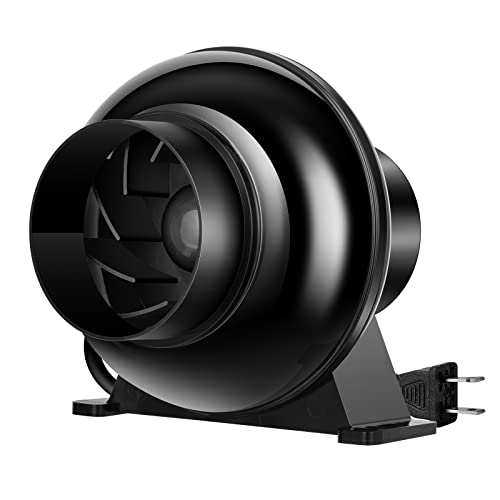
VIVOSUN D4 4" AC Motor Inline Fan, 195 CFM for Ventilation
It moves noticeably more air than the cheapest fan here for almost no extra cost, which matters once smoke has to travel any real distance through ducting to reach outside.
The three tiers
Beginner: Best first fan
someone venting a laser a short distance to a nearby window with a duct run of a few feet- Beginner pick
VIVOSUN P4 4" Inline Fan &Speed Control 130 CFM Exhaust Fan for Home
$26.39 Check pricePrices change often

The VIVOSUN P4 is rated 130 CFM and includes speed control, which is enough airflow for a short duct run to a nearby window or wall opening. Speed control also lets you turn the fan down when only light engraving smoke needs clearing and up during a heavier cut.
Not for: a setup with a long duct run or multiple bends between the laser and the outside vent, where airflow drops off more with distance and a higher-rated fan is worth the small price difference
Intermediate: Best value
most desktop laser owners venting to an outside wall or window at a typical distance- Intermediate pick
VIVOSUN D4 4" AC Motor Inline Fan, 195 CFM for Ventilation
$27.89 Check pricePrices change often
At 195 CFM for a couple of dollars more than the entry fan, this is more airflow for almost no added cost, which gives some margin against the airflow loss that happens over a longer duct run or a bend around a corner. It is the closest thing to a default answer on this page for a typical desktop setup.
Not for: someone in a very small, quiet room who finds the airflow and fan noise more than they need for light, occasional engraving
Expert: Performance ceiling
a shop, garage or shared space with a long duct run, multiple bends, or a larger or higher-power laser producing more smoke volume- Expert pick
Voltset 4 Inch Duct Fan 280 CFM Inline Ventilation Exhaust Fan
$44.99 Check pricePrices change often

The Voltset fan is rated 280 CFM, the highest airflow of the three, which matters most when ducting has to travel further or turn more corners before reaching outside air, both of which reduce effective airflow along the way.
Not for: a small bedroom or apartment setup with a short, straight duct run to a nearby window. That much airflow is louder and unnecessary there, and the 195 CFM fan does the job for less.
| Item | Price | Spec |
|---|---|---|
| VIVOSUN P4 Inline Fan | $26.39 | 130 CFM, speed control |
| VIVOSUN D4 Inline Fan | $27.89 | 195 CFM |
| Voltset Inline Duct Fan | $44.99 | 280 CFM |
| AC Infinity 4" Ducting, 8ft | $12.99 | 4-inch flexible aluminum |
Should I vent my laser outside or use a filter?
Venting outside is the more reliable option whenever it is physically possible. An inline fan pushing smoke through ducting to a window, wall vent or exterior door gap removes fumes from the room entirely. A carbon or HEPA filter unit instead recirculates filtered air back into the same room, and that filter's capacity is finite: it loads up with particulate over time and its ability to trap fumes degrades gradually, without any obvious signal to the operator that it has stopped working as well as it did on day one.
Filtering has a real place for apartments or rooms with no way to run a duct to the outside, but it is a compromise made out of necessity, not a straight upgrade over venting outside.
What CFM rating do I actually need?
There is no single correct number, since it depends on room size, duct length, and how many bends the ducting makes on its way outside. As a starting point, a short, mostly straight duct run to a nearby window is well served by a fan in the 130 to 200 CFM range. A longer run, multiple bends, or a larger work area benefits from a higher-rated fan such as the 280 CFM option in this roundup, since airflow drops off more the further and more indirectly it has to travel.
Do I still need a fan if I already have a fume extractor?
A standalone fume extractor filters and recirculates air rather than venting it outside, so it solves a different problem than an exhaust fan and duct. Some owners run both: an extractor for day-to-day filtering convenience, and a fan and duct they switch to or add for heavier cutting sessions where venting outside handles a larger volume of smoke more reliably than filtering alone.
Where should the ducting exit the room?
The shortest, straightest path to an operable window, a dryer-vent-style wall port, or a door gap works best, since every foot of ducting and every bend reduces the fan's effective airflow. Avoid venting into an attic, a shared wall cavity, or any enclosed space that is not genuinely outside air, since that just moves the fume problem into a different enclosed space.
How we chose
This roundup is researched from manufacturer listings and published specifications, not from in-person testing. Every product named is checked against PrintFarmCalc's own catalog of verified Amazon listings before it is recommended.
The deciding factor was CFM rating relative to duct run length, since a longer or more bent duct run loses more airflow along the way than a short, straight one.
Buying tips
Venting outside beats filtering, whenever it is possible.
An inline fan and a length of ducting to a window, wall vent or door gap moves laser smoke and fumes out of the room entirely. A carbon or HEPA filter unit instead pulls air through a filter and recirculates it back into the room, and that filter loses effectiveness gradually and silently as it loads up with particulate, with no built-in warning that it has stopped working well. If a duct run to the outside is possible at all, it is the more reliable option.
Match the fan's CFM to your duct run, not just to the laser.
A fan's rated CFM is its output in ideal, unobstructed conditions. Every foot of ducting and every bend the air has to turn through reduces real airflow below that number. A longer or bendier duct run needs a higher-rated fan to deliver the same effective airflow as a short, straight run with a lower-rated fan.
Use ducting sized to match the fan's inlet.
These fans are built around a standard 4-inch duct connection. Using ducting of the correct diameter, rather than improvising with a mismatched size, keeps the airflow the fan is rated for from being choked down at the connection point.
Seal the duct run, not just the fan.
Gaps or loose clamps along a flexible duct run let smoke leak into the room before it reaches the outside vent, which defeats the purpose of exhausting at all. Clamp every joint in the run, not just the connection at the fan itself.
Other options worth knowing about
- AC Infinity
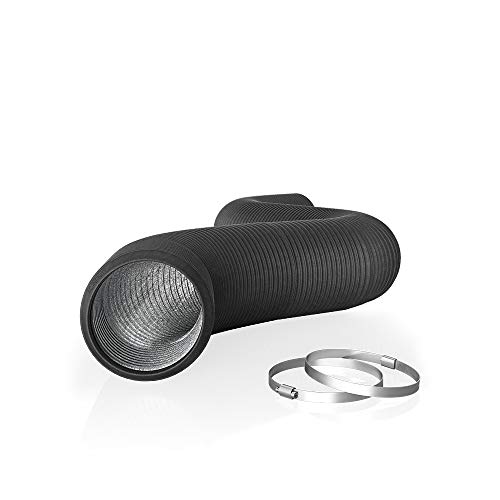
AC Infinity Flexible 4-Inch Aluminum Ducting, 8-Feet Long
$12.99 Check pricePrices change often - VIVOSUN
VIVOSUN 4 Inch Flex Aluminum Ducting, 8 Ft Air Duct with 2 Clamps, Silver
$13.99 Check pricePrices change often


Safety
Common questions
Is it better to vent a laser outside or use a fume filter?
Venting outside is generally the more reliable choice when it is physically possible, since it removes smoke and fumes from the room entirely rather than recirculating filtered air. A carbon or HEPA filter is a reasonable option when no duct run to the outside exists, but its filtering capacity degrades silently over time as the filter media loads up.
What CFM inline fan do I need for a desktop laser?
For a short, mostly straight duct run to a nearby window, a fan in the 130 to 200 CFM range is usually enough. Longer duct runs, multiple bends, or a larger work area benefit from a higher-rated fan, such as one rated around 280 CFM, since airflow drops off with distance and turns.
What size ducting do I need for a laser exhaust fan?
The inline fans in this roundup are built around a standard 4-inch duct connection, and matching flexible aluminum ducting in that same diameter keeps airflow from being restricted at the connection point.
Can I vent a laser through a dryer vent or attic space?
Venting through an existing outdoor-facing wall port, similar to a dryer vent, works well if it leads directly to outside air. Venting into an attic or an enclosed wall cavity that is not actually outside air just relocates the fume problem rather than solving it, and should be avoided.
Does a fume extractor replace the need for an exhaust fan?
Not exactly. A fume extractor filters and recirculates air within the room, while an exhaust fan and ducting remove air from the room entirely. Some owners use an extractor for daily convenience and switch to venting outside for heavier cutting sessions that produce more smoke.