Best hotend upgrades
Quick answer
A Dragon-style all-metal hotend upgrade like the $16.23 Ender 3 kit removes the roughly 240C ceiling that a stock PTFE-lined hotend runs into, which matters only if polycarbonate or long ABS runs are actually part of the plan.

Ender 3 Hotend Upgrade for Voron 2.4 Ender 3 V2 Pro Cr10 Ender 5 Pro/Plus Ender 6 Rapido Dragon Hotend 3D Printer Part Kit Ceramic All Metal Hot end Copper Heater Block Bimetal Heatbreak
An all-metal, ceramic-insulated hotend with a bimetal heatbreak clears the PTFE temperature ceiling for under $17, which is the cheapest way to add real high-temperature headroom to a stock Ender-style printer.
The three tiers
Beginner: Best first upgrade
a stock Ender-style printer owner who wants to print ABS or a longer high-temperature job without heat creepA stock PTFE-lined hotend is limited to roughly 240C because the PTFE liner itself starts to degrade above that point, which rules out polycarbonate and makes long ABS runs risky. This all-metal, ceramic-insulated kit with a bimetal heatbreak replaces the liner with metal that tolerates higher sustained temperatures, opening up materials the stock hotend cannot safely run.
Not for: anyone who only prints PLA and PETG. A stock hotend already handles both of those materials well within its temperature range, and swapping in an all-metal hotend adds a wiring and firmware step for a temperature ceiling you will never approach
Intermediate: Best for higher flow
someone whose bottleneck is print speed rather than temperature
This Volcano-style all-metal hotend uses a longer melt zone than a stock hotend, which lets the same nozzle diameter melt more plastic per second. That raises the practical print speed ceiling for larger, simpler parts where detail matters less than throughput, without changing what temperatures the hotend can reach.
Not for: anyone chasing fine detail on small parts; a longer melt zone is built for volume, not precision, and it usually needs matching slicer profile changes to get right
Expert: Performance ceiling
a heavy user or small print farm that needs consistent thermal performance over long duty cycles
This Micro Swiss all-metal hotend kit is built and sold as a direct, precision-fit replacement rather than a generic clone, which matters for consistent thermal transfer across hundreds of hours of runtime. For a shop running ABS or ASA on a schedule, a hotend that holds temperature reliably print after print is worth the higher price over a budget all-metal kit.
Not for: a casual hobbyist printing a spool or two a month. Do not spend over $60 on a hotend if your printing is occasional and mostly PLA or PETG; the stock hotend or the cheaper all-metal kit above already covers that use case
| Hotend | Price | Design | Best for |
|---|---|---|---|
| Ender 3 All-Metal Ceramic Hotend | $16.23 | All-metal, bimetal heatbreak | Clearing the 240C PTFE ceiling |
| POLISI3D Volcano-Style Hotend | $32.98 | All-metal, high-flow melt zone | Faster prints on large, simple parts |
| Micro Swiss All-Metal Hotend Kit | $63.50 | Precision-fit all-metal | Heavy duty cycles, consistent thermal transfer |
Why is a PTFE-lined hotend limited to about 240C?
A stock PTFE-lined hotend routes the PTFE tubing itself close to or into the heated zone. PTFE starts to degrade structurally above roughly 240C, which both caps the safe print temperature and, over time, can shed material into the melt. That ceiling has no effect on PLA or PETG, both of which print comfortably below it, but it rules out polycarbonate outright and makes long runs at the top of ABS's range riskier.
An all-metal hotend removes the PTFE from the hot zone entirely, replacing it with a metal heatbreak that tolerates much higher sustained temperatures. That is the entire value proposition of an all-metal upgrade: more temperature headroom, not more precision or better first layers.
Do I need an all-metal hotend to print ABS?
Not strictly. Standard ABS prints in a temperature range that a stock PTFE-lined hotend can usually handle for shorter jobs. The risk grows on longer prints and at the higher end of ABS's printable range, where sustained heat has more time to affect the PTFE liner. An all-metal hotend removes that risk margin rather than being a hard requirement for every ABS print.
What is a Volcano-style hotend actually for?
A Volcano-style hotend extends the length of the melt zone, giving the filament more time in contact with heat before it exits the nozzle. That allows a higher volumetric flow rate at the same nozzle diameter, which speeds up large, simple prints where wall thickness and infill dominate the print time. It does not improve detail and is not built for tall, thin, detailed parts.
Is a hotend upgrade worth it if I only print PLA?
Generally no. PLA prints well within a stock hotend's temperature range, and a stock hotend is fine for PLA and PETG. Saying so plainly is the honest answer for most owners: an all-metal or high-flow hotend solves a problem, temperature ceiling or speed, that a PLA-only workflow does not actually have.
How we chose
This roundup is researched from manufacturer listings and published specifications, not from in-person testing. Every part named is checked against PrintFarmCalc's own catalog of verified Amazon listings before it is recommended.
The deciding factors were whether a listing states an all-metal or PTFE-lined design, what problem the hotend is actually built to solve, speed, temperature ceiling, or duty cycle, and whether the upgrade matches a real limitation of the stock hotend rather than a marginal gain.
Buying tips
Do you actually have a PTFE temperature problem?
A stock PTFE-lined hotend is genuinely fine for PLA and PETG, which print well under 240C. The upgrade only pays off if polycarbonate, nylon, or long ABS runs at the high end of their temperature range are part of the plan. Buying an all-metal hotend to fix a problem you do not have adds installation risk for no benefit.
Check that the hotend matches your printer's mount
Hotend kits are built around a specific heat sink and mounting pattern, Ender-style, Voron-style and proprietary designs like Bambu's are not interchangeable. Confirm the listing states compatibility with the exact printer model before ordering, since a hotend that does not physically mount is not a usable upgrade.
A bimetal or all-metal heatbreak matters more than the brand name
The heatbreak, the narrow tube between the heated block and the cold end, is what actually determines high-temperature performance and resistance to heat creep. A bimetal heatbreak (steel and copper) transfers heat efficiently at the cold end while resisting the heat creep that can jam filament in an all-metal hotend running hot.
Budget for a firmware or slicer adjustment
Swapping to an all-metal hotend usually means the maximum temperature limit in firmware needs raising to actually use the new headroom, and flow rate may need recalibrating if the melt zone geometry changed. Treat the hotend swap and the follow-up calibration as one project, not two separate steps.
Other options worth knowing about
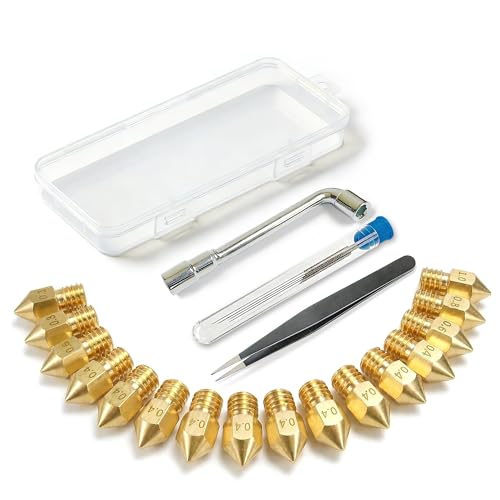
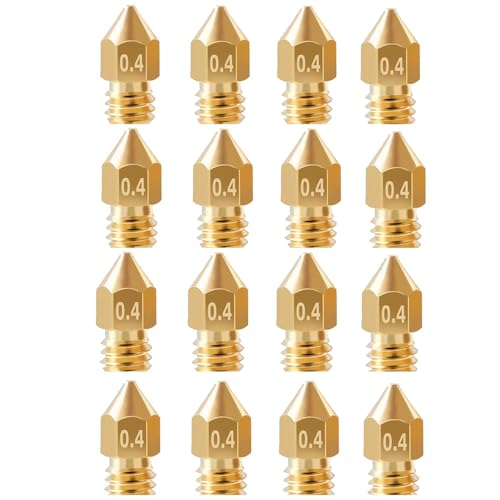
- LKNNEASTO
3D Printer Nozzle Kit, 16PCS MK8 Brass Nozzles 0.2/0.4/0.6/0.8/1.0mm
$7.19 Check pricePrices change often - Mudder
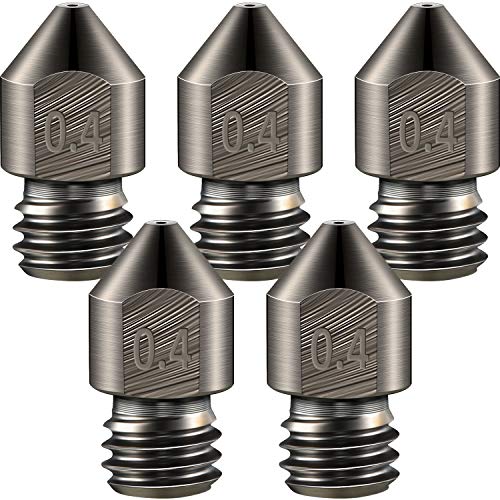
Mudder 5 Pcs Hardened Steel Nozzles 0.4mm Mk8 3D Printer Nozzles
$8.49 Check pricePrices change often - XIFOWE
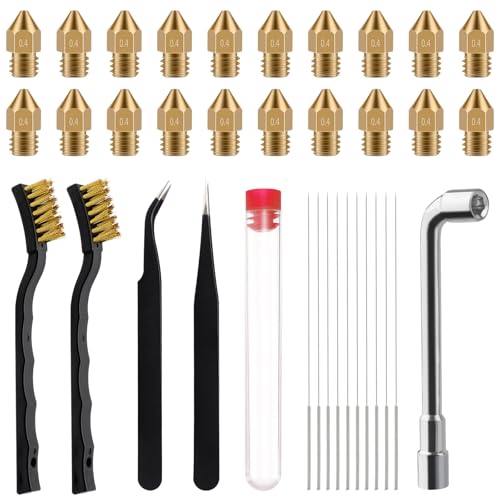
XIFOWE MK8 Nozzles 25 pcs 0.4mm 3D Printer Extruders Brass Nozzles
$9.99 Check pricePrices change often


Common questions
What temperature can a stock PTFE-lined hotend safely reach?
A PTFE-lined hotend is generally limited to roughly 240C, above which the PTFE liner itself begins to degrade. That ceiling is well above what PLA and PETG need, so it causes no issue for those materials, but it rules out polycarbonate and adds risk to long runs at the top of ABS's temperature range.
Do I need an all-metal hotend for PETG?
No. PETG prints comfortably within the temperature range a stock PTFE-lined hotend supports. An all-metal upgrade adds no benefit for PETG specifically; it only matters once polycarbonate, nylon or sustained high-temperature ABS runs enter the print queue.
What is a bimetal heatbreak and why does it matter?
A bimetal heatbreak combines steel, which resists heat transfer along its length, with copper, which transfers heat efficiently where cooling is needed. That combination resists the heat creep that can jam an all-metal hotend running hot, while still keeping the cold end of the hotend properly cooled, which a single-material heatbreak balances less well.
Will an all-metal hotend make my prints better quality?
Not by itself. An all-metal hotend raises the temperature ceiling and, in some designs, the achievable flow rate. It does not improve first-layer adhesion, dimensional accuracy or surface finish on its own. Those come from bed leveling, cooling and slicer settings, which are separate from the hotend upgrade.
Can I install a hotend upgrade myself?
Most all-metal hotend kits are designed as a bolt-in replacement for the stock hotend and are within reach of an owner comfortable with basic tools and a firmware setting change. Expect to also recalibrate the maximum temperature limit and possibly flow rate afterward, since those depend on the new hotend's geometry.