Best 3D printer build plates and adhesion
Quick answer
A double-sided PEI and PEO flexible magnetic plate like the $17.99 YOOPAI sheet handles PLA and PETG without switching adhesives and lets a finished part snap off cold instead of being pried, which is the single upgrade most owners should make before reaching for glue.

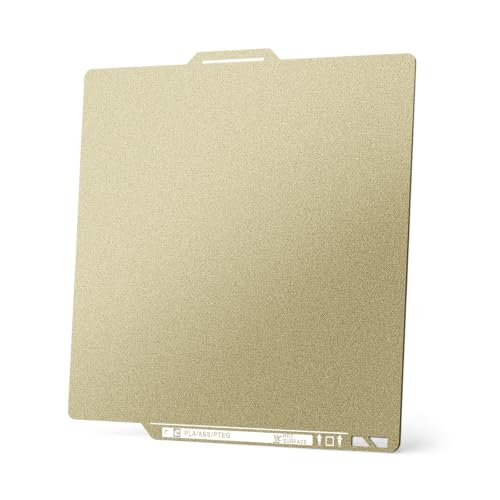
YOOPAI Double-Sided PEI + PEO Sheet and Flexible Magnetic Build Plate, 235x235mm 3D Printer Bed Platform for Creality Ender 3 V3 SE/KE /K1/K1C/ Ender 3/Ender 3 V3/3 Pro/ 5 S1/ 3 S1 Pro/3 Neo
A double-sided PEI and PEO surface handles both PLA and PETG without switching adhesives, and the magnetic backing lets a finished part pop off cold instead of getting pried at with a scraper.
The three tiers
Beginner: Best fix for a warping OEM plate
a printer with a stock plate that has adhesion problems on ABS or PETG- Beginner pick
Geeetech 6-Pack 3D Printer Glue Sticks, 36g, Enhanced First Layer Adhesion
$11.99 Check pricePrices change often

A plain glue stick is the cheapest and most reliable fix for warping on a plate that has gotten slick from oils or wear. A thin, even layer restores grip for ABS and PLA on almost any plate surface, and a 6-pack lasts a long time since only a light coating is needed per print.
Not for: a printer where PLA already sticks reliably to a clean plate; adding glue to a surface that is not causing problems just adds a cleaning step for no benefit
Intermediate: Best plate replacement
a worn, scratched or slick OEM plate that needs replacing rather than patching with glueThis double-sided PEI and PEO magnetic sheet gives a fresh, textured surface with strong first-layer grip while hot and easy, tool-free removal once the plate cools and flexes. Having PEI on one side and PEO on the other means one plate covers materials with different adhesion needs instead of needing separate sheets.
Not for: a printer whose bed size or magnetic mount does not match this sheet's dimensions; check the listed compatible models before ordering since flexible plates are sized to a specific bed
Expert: Best for multi-material consistency
someone running several printers or filament types who wants predictable adhesion without guessing- Expert pick
Magigoo All-in-One 3D Printer Bed Adhesive Glue for ABS, PLA, PETG, 50mL
$20.90 Check pricePrices change often

Magigoo is formulated specifically as an all-in-one bed adhesive engineered for a defined set of materials rather than a general-purpose stick, which removes the trial and error of figuring out how much glue a new filament needs. For a shop switching between PLA, ABS and PETG across multiple printers, one predictable adhesive per material saves failed first layers.
Not for: a single-printer, single-material hobbyist. Do not pay a premium for an engineered adhesive if a $2 glue stick and a bit of trial and error already solves your adhesion problem
| Product | Price | Type | Best for |
|---|---|---|---|
| Geeetech Glue Stick 6-Pack | $11.99 | Adhesive | Fixing warping on an existing plate |
| YOOPAI Double-Sided PEI + PEO Plate | $17.99 | Flexible magnetic plate | Replacing a worn or scratched OEM plate |
| Magigoo All-in-One Adhesive | $20.90 | Engineered adhesive | Consistent results across multiple materials |
Why does glue stick work as a release agent on PETG instead of an adhesive?
PETG bonds chemically to bare, uncoated PEI, meaning the two materials fuse at a molecular level rather than just sticking mechanically. That bond can be strong enough to tear the PEI surface layer off the plate when a finished print is pried loose, damaging the plate rather than just releasing the part.
A thin layer of glue stick interrupts that chemical bond by sitting between the PETG and the bare PEI. The print still holds to the plate through the glue layer while hot, but because the destructive chemical bond to the PEI itself never forms, the part releases cleanly once cool instead of tearing the surface. This is the opposite of how glue stick is normally understood, as an adhesive, and is worth knowing before assuming PETG needs no bed prep on a PEI plate.
Smooth PEI or textured PEI: which is better?
Smooth PEI gives a glossy, shiny bottom surface on a finished print and generally needs a thin layer of adhesive for reliable grip, especially with PETG for the reason above. Textured PEI has a slightly rough surface baked in, which increases mechanical grip during printing and leaves a matte, slightly textured bottom on the part. Neither is universally better; the choice comes down to whether a glossy or matte bottom surface matters for the finished part.
Do I need a different plate for every filament type?
Not necessarily. A single well-chosen PEI surface, smooth or textured, handles PLA, ABS and PETG reasonably well with the right adhesive approach for each. A double-sided plate with two different surface types, like a PEI and PEO combination, gives more flexibility without owning three or four separate plates, which is a reasonable middle ground for anyone printing more than one material regularly.
How do I know if my adhesion problem is the plate or the first layer settings?
If a print fails to stick inconsistently, sometimes fine, sometimes lifting at a corner, the more common cause is first-layer height or bed leveling rather than the plate surface itself. If adhesion has gotten steadily worse over weeks or months on prints that used to stick fine, that points to a dirty or worn plate rather than a settings problem. Try cleaning the plate with isopropyl alcohol before assuming new hardware is needed.
How we chose
This roundup is researched from manufacturer listings and published specifications, not from in-person testing. Every product named is checked against PrintFarmCalc's own catalog of verified Amazon listings before it is recommended.
The deciding factors were whether a plate or adhesive solves a specific, real adhesion problem, plate wear, PETG bonding too aggressively, or multi-material inconsistency, rather than being a generic upgrade with no clear use case.
Buying tips
PETG and bare PEI do not mix well
PETG bonds chemically to a bare, uncoated PEI surface strongly enough that it can tear the surface layer off the plate when the print is removed. This is counterintuitive because glue stick is normally thought of as an adhesive, but on PETG a thin layer of glue stick works as a release agent: it prevents the chemical bond to PEI, not adds one, while still giving enough grip to hold the first layer down.
Match the plate surface to the material
A smooth PEI surface gives a glossy bottom layer and moderate grip, textured PEI gives more grip and a matte bottom finish, and PEO surfaces are formulated for different release behavior on materials like PETG. Check what a plate is actually built for rather than assuming any PEI sheet works identically for every filament.
Know when a plate needs replacing versus cleaning
A plate covered in fingerprint oils or old glue residue often just needs a wash with soap and water or isopropyl alcohol. A plate that is genuinely worn, scratched through the surface coating, warped, or peeling at a corner, needs replacing; cleaning will not restore grip once the surface layer itself is damaged.
Magnetic flexible plates need the right mount
A flexible magnetic build plate only works if the printer's bed already has, or can have, the matching magnetic base installed. Confirm the plate's listed bed size and mounting style match the printer before ordering, since these sheets are sized and shaped for specific models.
Other options worth knowing about
- HENYCEE
HENYCEE PEI Build Plate for Bambu Lab X2D/P2S/X1/X1C/X1E/P1P/P1S/A1
$16.99 Check pricePrices change often


Safety
Common questions
Why does PETG stick too well to a bare PEI plate?
PETG bonds chemically to bare, uncoated PEI rather than just sticking mechanically, and that bond can be strong enough to tear the surface coating off the plate when a print is removed. A thin layer of glue stick prevents that chemical bond from forming while still holding the print down during printing, so the part releases cleanly instead of damaging the plate.
Is glue stick an adhesive or a release agent on a 3D printer bed?
It depends on the filament. On PLA and ABS, glue stick works as a true adhesive, adding grip that the bare plate lacks. On PETG over bare PEI, it works the opposite way, as a release agent that stops PETG from chemically bonding to and tearing the plate, while still providing enough grip to hold the first layer.
How often should a PEI build plate be replaced?
There is no fixed schedule; replace it once cleaning with soap and water or isopropyl alcohol no longer restores grip, or once the surface is visibly scratched through, warped, or peeling at an edge. A well-maintained PEI plate, cleaned regularly and not damaged by aggressive scraping, can last a very long time.
Do I need a magnetic flexible plate or is a fixed plate fine?
A fixed plate is perfectly usable and is what most printers ship with. A flexible magnetic plate is an upgrade for convenience: it lets a finished print pop off by flexing the sheet instead of prying with a scraper, which reduces the risk of scratching the surface or damaging delicate parts during removal.
What is the difference between PEI and PEO build surfaces?
PEI is the more common build surface material, available in smooth or textured finishes, and works well across PLA, ABS and PETG with appropriate adhesive use. PEO is a different polymer surface formulated with different release characteristics, often paired with PEI on double-sided plates to give one plate two different adhesion behaviors depending on which side is used.