First layer squish and Z offset
Quick answer
If you asked for a 0.20 mm first layer and measured 0.28 mm, lower the nozzle by 0.08 mm. A correct first layer is slightly wider than a normal line and shows no gaps between adjacent passes.
The offset arithmetic is exact. Bed temperatures and surface preparation are conventions drawn from manufacturer guidance, and your plate maker knows your plate better than we do.
Slight squish. The first layer should look joined, not shiny and round.
On most machines a more negative Z offset means a lower nozzle, but a few invert it. Change the offset by 0.02 mm, print a patch, and confirm the direction before making a large adjustment.
Build surfaces and adhesion
- BOENFU
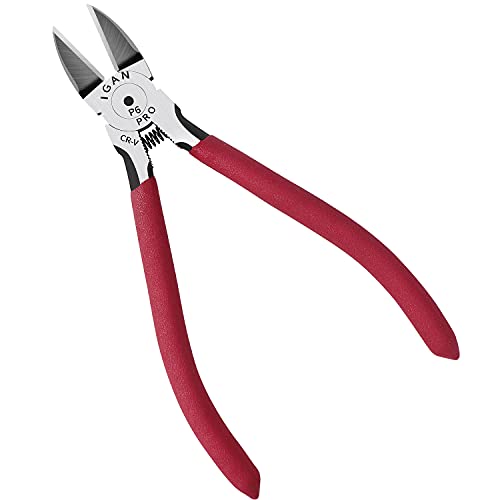
BOENFU Wire Cutters Heavy Duty Snips Flush Cut Side Cutters Pliers
$7.99 Check pricePrices change often - PEASUG
Deburring Tool with 12 HSS Blades for Metal Resin PVC 3D Print
$9.99 Check pricePrices change often - Geeetech
Geeetech 6-Pack 3D Printer Glue Sticks, 36g, Enhanced First Layer Adhesion
$11.99 Check pricePrices change often


Common questions
What should a good first layer look like?
The lines should be slightly wider than they are on later layers and just touching each other with no gaps, giving a continuous surface with a faintly matte finish. If you can see distinct round strands with gaps between them the nozzle is too high, and if the surface is glossy with ridges pushed up between lines it is too low.
Which way does Z offset go?
On most firmware a more negative Z offset moves the nozzle closer to the bed, which increases squish. A few machines invert the sign, so the reliable method is to change it by 0.02 mm, print a test patch and observe which way the result moved. Confirm the direction once on a new machine and you never have to think about it again.
Do I need to re-level after changing the build plate?
Yes, because plates differ in thickness by more than the entire usable squish range. A textured PEI sheet and a smooth PEI sheet can differ by a couple of tenths of a millimetre, which is the difference between a perfect first layer and a nozzle dragging through it. Re-run the probe and re-check the offset after any plate change.
Why does PETG stick too well?
PETG forms a genuine chemical bond with bare PEI, and it can be strong enough to tear chunks out of the sheet when you remove the part. The counterintuitive fix is a glue stick used as a release agent rather than an adhesive, putting a sacrificial layer between the plastic and the plate. Printing PETG a little higher than PLA also helps.