Best lasers for cutting wood
Quick answer
The ATOMSTACK A20 PRO V2 (20W as listed, $389.99) cuts basswood and plywood in fewer passes than a lower-power diode, and it is the best laser for cutting wood on a hobbyist budget that still stops short of a CO2 machine.

ATOMSTACK 20W Laser Engraver, A20 PRO V2 Laser Cutter, High Accuracy Laser Engraving Machine for Personalized Gifts, Business Cards, Wood, Metal, Acrylic, Leather
A 20W module (as listed) with auto air assist cuts common laser-craft wood, basswood and thin plywood, in fewer passes than the lower-power diode units in this roundup, at a price that stays well under CO2 territory.
The three tiers
Beginner: Best first machine for wood
a hobbyist who mostly cuts basswood ornaments and thin plywood shapes and wants working room to match- Beginner pick
Ortur Laser Master 3, 10000mW Laser Engraver, 400×400mm Working Area
$289.99 Check pricePrices change often

The Ortur Laser Master 3 pairs a 400 x 400mm bed with a 10000mW module (as listed) for $289.99, enough room to lay out a full sheet of basswood or plywood without repositioning. Thin stock cuts in one or two passes; thicker hardwood needs several slower passes.
Not for: anyone who wants to cut hardwood thicker than a few millimeters in a single pass
Intermediate: Best value
someone cutting wood regularly who wants fewer passes and cleaner edges without stepping up to CO2The ATOMSTACK A20 PRO V2 doubles the beginner tier's listed power to 20W (as listed) for $389.99 and includes auto air assist, which clears smoke and debris from the cut line as it happens for cleaner, less charred edges on wood. Wood, along with metal, dark acrylic and leather, is named directly in the listing.
Not for: a budget buyer only cutting the occasional thin ornament; the beginner tier does that job for $100 less
Expert: Performance ceiling
someone cutting hardwood or thick plywood in volume who needs single-pass depth a diode cannot match- Expert pick
OMTech K40+ 45W CO2 Laser Engraver & Cutter with LightBurn
$749.99 Check pricePrices change often

The OMTech K40+ with LightBurn carries a 45W CO2 tube (as listed) for $749.99, which cuts plywood and hardwood far more cleanly and in far fewer passes than any diode module in this roundup. LightBurn is included rather than a separate purchase.
Not for: someone only engraving thin basswood ornaments occasionally. The setup cost, exhaust ducting, water cooling and mirror alignment, is real overhead for a job a $290 to $390 diode machine already does well.
| Model | Price | Laser type | Power (as listed) | Air assist |
|---|---|---|---|---|
| Ortur Laser Master 3 | $289.99 | Diode | 10000mW | Not included |
| ATOMSTACK A20 PRO V2 | $389.99 | Diode | 20W | Auto air assist included |
| OMTech K40+ with LightBurn | $749.99 | CO2 | 45W | Not included |
What wattage do I need to cut wood on a laser?
A 10W-class diode module cuts thin basswood and plywood, roughly 1/8 inch, in one to three passes. A 20W-class diode module cuts the same stock faster and handles slightly thicker plywood with fewer passes and less char. For solid hardwood or plywood thicker than about a quarter inch in a single pass, a CO2 laser in the 40W-plus range is the more realistic tool.
Can a diode laser cut hardwood?
It can, but expect more passes, more char and slower results than on basswood or thin plywood. Hardwood density varies by species, and a diode module has less raw cutting power than a CO2 tube, so a project heavy on hardwood cutting is a strong signal to consider stepping up to CO2.
What wood should I avoid lasering?
Avoid pressure-treated lumber and any wood with an unknown chemical treatment, since burning it can release compounds the laser wasn't designed to handle safely. Avoid material that looks or feels like a wood-grain vinyl or laminate rather than solid wood or real veneer, since some wood-look sheet goods are actually PVC-based and release chlorine gas when lasered.
Diode or CO2 for cutting wood specifically?
A diode laser is the better starting point for basswood ornaments, thin plywood shapes and craft projects under roughly 1/8 inch thick, at a fraction of the cost of a CO2 machine. A CO2 laser earns its higher price once the work regularly involves thicker plywood, hardwood, or cutting volume where multiple slow diode passes become impractical.
How we chose
This roundup is researched from manufacturer listings and published specifications, not from in-person testing. Every product named is checked against PrintFarmCalc's own catalog of verified Amazon listings before it is recommended.
For wood cutting specifically, the deciding factors were listed power, whether the listing names wood directly among supported materials, and whether air assist is included or supported, since a cleaner cut line matters more on wood than on most other laser-craft materials.
Buying tips
Match the wood to the machine, not the other way around
Laser-grade basswood and thin plywood, typically sold in 1/8 inch sheets, cut predictably on a diode laser. Solid hardwood, thick plywood and any pressure-treated or chemically finished lumber either need far more passes, produce excess char, or release unknown chemicals when burned. Stick to laser-friendly stock unless a CO2 machine and known-safe wood are both confirmed.
Air assist is worth adding for wood specifically
Wood chars more visibly than acrylic or leather, and a steady jet of air across the cut line reduces that char and clears smoke that would otherwise redeposit as soot on the surface. If a machine does not include air assist, it is one of the more worthwhile add-ons for wood cutting specifically.
Multiple slow passes beat one fast pass on thicker stock
Pushing a diode laser to cut thick wood in a single fast pass usually produces a rough, heavily charred edge or fails to cut through at all. Several passes at a moderate speed and consistent focus height produce a cleaner cut and put less strain on the module than forcing one aggressive pass.
Keep a fire extinguisher within reach specifically for wood
Wood is more prone to smoldering after a cut than acrylic or leather, especially on repeated passes over the same line. Never leave a laser cutting wood unattended, and keep an extinguisher rated for wood and paper fires within arm's reach of the machine.
Other options worth knowing about
- Juexica
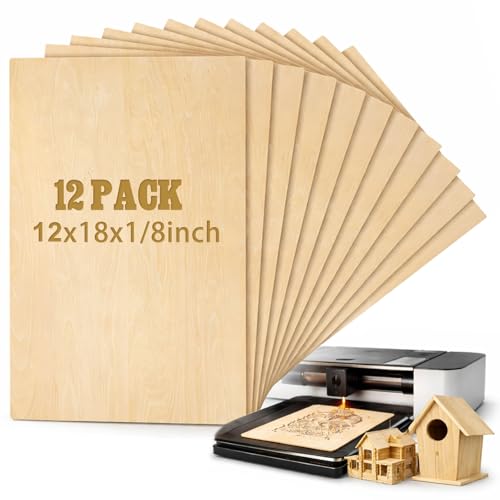
Juexica 12 Pcs 12" X 18"X 1/8" Basswood Plywood Sheets for Laser Cutting
$29.99 Check pricePrices change often - KoveYzao
ATOMSTACK Swift 12000mW Laser Engraver & Cutter for Beginners
$159.99 Check pricePrices change often



Safety
Common questions
What is the best laser for cutting wood on a budget?
The ATOMSTACK A20 PRO V2, at $389.99 with a 20W module (as listed) and included auto air assist, cuts basswood and plywood in fewer passes and with less char than a lower-power diode. It stays well under CO2 pricing while still handling most craft-scale wood cutting.
Can a diode laser cut through 1/4 inch plywood?
A 20W-class diode module can cut 1/4 inch plywood, but usually needs several passes at reduced speed and produces more char than thinner stock. A CO2 laser cuts the same material faster and in fewer passes if that thickness is a regular part of the work.
Why does my wood cut come out charred and rough?
Charring usually means the pass is too slow for the power setting, the material needs more passes at a faster speed instead of one slow pass, or air assist is missing to clear smoke from the cut line. Test on scrap material at a few speed and power combinations before running a finished piece.
Is it safe to laser cut treated lumber?
No. Pressure-treated lumber and wood with unknown chemical finishes can release compounds when burned that a laser setup is not built to handle safely, beyond the normal wood smoke a laser already produces. Stick to untreated basswood, plywood or known laser-craft stock, and confirm any unfamiliar material before cutting it.
What safety glasses do I need for cutting wood with a laser?
Match the glasses to the laser, not the material. A diode laser needs glasses rated for roughly 445nm (safety-glasses-diode); a CO2 laser needs glasses rated for its 10.6 micron beam (safety-glasses-co2). The material being cut, wood in this case, does not change which glasses are correct.