Best lasers for cutting acrylic
Quick answer
The OMTech K40+ (45W as listed, $669.99) cuts clear acrylic cleanly at a real hobbyist price, and it is the best laser for cutting acrylic because a diode laser cannot cut clear acrylic at any power: the material is transparent at a diode's wavelength.

OMTech K40+ 45W Desktop CO2 Laser Engraver & Cutter
A 45W CO2 tube (as listed) cuts both clear and colored cast acrylic cleanly, and clear acrylic specifically requires CO2 rather than a diode laser, which cannot cut it regardless of power.
The three tiers
Beginner: Easiest to start
someone new to cutting acrylic who wants a camera-guided, enclosed machine over the cheapest possible price- Beginner pick
Glowforge Aura 6W Laser Engraver & Cutter with HD Camera & 12-in Workspace
$999.00 Check pricePrices change often

The Glowforge Aura is a fully enclosed, camera-guided CO2 machine with a 12-in workspace (as listed) for $999.00, which handles placement and focus in software instead of leaving it to the owner. It cuts clear and colored acrylic without the setup work a K40-style box requires.
Not for: anyone cutting 1/4 inch or thicker acrylic sheet regularly. The 6W module (as listed) suits engraving and thinner stock, not deep single-pass cuts through thick sheet
Intermediate: Best value
someone ready to set up their own enclosure and exhaust for genuine acrylic-cutting power at the lowest price- Intermediate pick
OMTech K40+ 45W Desktop CO2 Laser Engraver & Cutter
$669.99 Check pricePrices change often
At $669.99 the OMTech K40+ carries a 45W CO2 tube (as listed), enough to cut both clear and cast colored acrylic cleanly in a single pass on typical sheet thicknesses. It requires the owner to route exhaust outside and set up water cooling, which is the tradeoff for the lower price.
Not for: someone who wants to unbox a machine and start cutting the same afternoon with no setup work
Expert: Best for repeat production runs
someone cutting acrylic parts in volume who wants camera-guided repeat accuracy and ventilation-free operation- Expert pick
Glowforge Aura Laser Engraver & Cutter with Craft Laser Filter
$1,378.99 Check pricePrices change often

The Glowforge Aura with Craft Laser Filter adds integrated filtration to the Aura's enclosed, camera-guided platform for $1,378.99, which removes the need for outdoor exhaust ducting entirely and helps line up repeat cuts on identical acrylic parts. That combination matters for a shared studio running the same part over and over.
Not for: anyone who already has exhaust ducting in place and wants maximum cutting depth per dollar. The OMTech K40+ above cuts thicker acrylic faster for less than half the price once ventilation is not the limiting factor.
| Model | Price | Power (as listed) | Cuts clear acrylic | Enclosure |
|---|---|---|---|---|
| Glowforge Aura 6W | $999.00 | 6W | Yes, thinner sheet | Fully enclosed |
| OMTech K40+ 45W | $669.99 | 45W | Yes | Boxed frame |
| Glowforge Aura with Craft Laser Filter | $1,378.99 | Not stated | Yes | Fully enclosed with filtration |
Can a diode laser cut clear acrylic?
No, not at any power. Clear acrylic is transparent at a diode laser's wavelength, roughly 445nm, which means the beam passes through the material instead of being absorbed and converted to heat. This is a property of clear acrylic itself, not a limitation that a stronger diode module fixes. A CO2 laser, at 10.6 microns, is absorbed by clear acrylic and cuts it cleanly.
What about black or colored acrylic?
Black and colored cast acrylic absorb a diode laser's wavelength well enough to cut, unlike clear acrylic. A diode machine is a workable choice for a project built entirely around colored or black sheet. The moment clear sheet is part of the plan, the project needs a CO2 laser instead.
How do I know if my acrylic sheet is safe to laser?
Confirm the sheet is cast acrylic, sometimes labeled PMMA, rather than PVC-based sign board or foam board, which can look similar but releases chlorine gas when burned. Product listings for laser-craft acrylic typically say "cast acrylic" directly; sheet without that label should be confirmed before cutting.
What CO2 power do I need to cut acrylic?
A 45W-class CO2 tube cuts typical hobbyist acrylic sheet thicknesses, roughly 1/8 to 1/4 inch, in a single pass. Lower-power CO2 units still cut acrylic but need more passes or slower speeds on the same thickness, similar to how a lower-power diode needs more passes to cut wood.
How we chose
This roundup is researched from manufacturer listings and published specifications, not from in-person testing. Every product named is checked against PrintFarmCalc's own catalog of verified Amazon listings before it is recommended.
Because clear acrylic specifically requires a CO2 laser to cut at all, every machine recommended here is CO2, not diode, and the deciding factors were listed tube power, enclosure and exhaust requirements, and whether cutting software is included.
Buying tips
Clear acrylic needs CO2, full stop
Clear or transparent acrylic transmits a diode laser's roughly 445nm wavelength instead of absorbing it, so no amount of diode power cuts it. A CO2 laser's 10.6 micron wavelength is absorbed by clear acrylic and cuts it cleanly. This is a property of the material, not a limitation of any specific diode machine.
Colored and black cast acrylic is a different story
Black or colored cast acrylic absorbs a diode laser's wavelength and does cut on a diode machine, unlike clear acrylic. If the project uses colored or black sheet exclusively, a diode laser is a workable option; if any part of it needs clear sheet, plan on CO2.
Confirm the sheet is actually cast acrylic, not PVC foam board
Some clear or colored plastic sheet sold for signage is PVC-based, not cast acrylic. Burning PVC releases chlorine gas that damages the machine and harms the operator. Check the listing or the sheet's markings for "cast acrylic" or "PMMA" before assuming a plastic sheet is safe to laser.
Acrylic fumes need real ventilation, not just a fan
Cutting acrylic produces a strong, distinctive odor and fumes that should be ducted outdoors, not simply blown around the room. A machine with integrated filtration built for that airflow is a genuine alternative to outdoor ducting; a box fan pointed at a window is not.
Other options worth knowing about
- YMYKLB
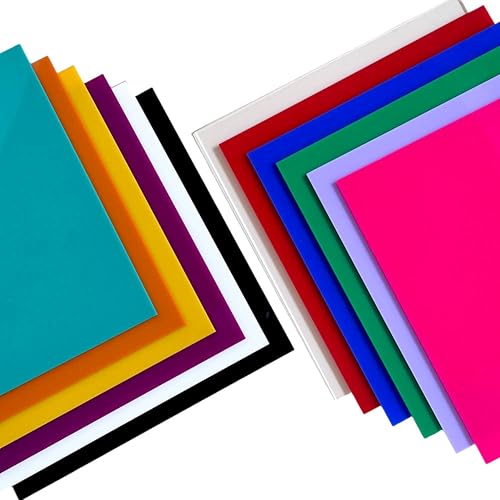
Colored Cast Acrylic Sheets, Plexiglass Sheets Polycarbonate 1/8 Inch 12X12
$34.19 Check pricePrices change often - KAITELA
KAITELA Pack of 10 Colored Cast Acrylic Sheet 12" x 16" x 1/8" Thick (3mm)
$49.99 Check pricePrices change often - OMTech
OMTech K40+ 45W CO2 Laser Engraver & Cutter with LightBurn
$749.99 Check pricePrices change often




Safety
Common questions
Can a diode laser engraver cut clear acrylic?
No. Clear acrylic is transparent at a diode laser's roughly 445nm wavelength, so the beam passes through it instead of cutting it, regardless of the module's power. Only a CO2 laser, at 10.6 microns, is absorbed by clear acrylic and cuts it. This is a property of the material, not the machine.
What is the best laser for cutting acrylic?
The OMTech K40+, at $669.99 with a 45W CO2 tube (as listed), cuts both clear and colored cast acrylic cleanly at the lowest price in this roundup. It requires the owner to set up their own exhaust ducting and water cooling, which is the tradeoff for the price.
Can a diode laser cut colored acrylic?
Yes, black and colored cast acrylic absorb a diode laser's wavelength well enough to cut, unlike clear acrylic. A diode machine works for projects built entirely from colored or black sheet, but cannot substitute for CO2 the moment clear sheet is involved.
Is the plastic sheet at the hardware store safe to laser as acrylic?
Not automatically. Some clear or colored plastic sheet sold for signage is PVC-based rather than cast acrylic, and burning PVC releases chlorine gas that damages the laser and is hazardous to breathe. Confirm the sheet is labeled cast acrylic or PMMA before cutting it.
What safety glasses do I need to cut acrylic on a CO2 laser?
Glasses rated for a CO2 laser's 10.6 micron beam (safety-glasses-co2). Glasses built for a diode laser's roughly 445nm wavelength give no protection against a CO2 beam. Match the glasses to the machine, not the material being cut.