PETG shrinkage compensation for a 200 mm dimension
Quick answer
PETG typically shrinks about 0.4 percent, so to finish at 200 mm you should model or scale the part to 200.8 mm. That is 0.8 mm of compensation.
Typical shrinkage varies by brand, geometry and chamber temperature. A measured test part from your own machine beats any published figure.
| Shrinkage assumed | Scale factor | Model size for 200 mm | Error if uncompensated |
|---|---|---|---|
| 0.2% | 100.2% | 200.4 mm | 0.4 mm small |
| 0.4% | 100.4% | 200.8 mm | 0.8 mm small |
| 0.6% | 100.6% | 201.21 mm | 1.2 mm small |
Why parts come out undersized
Thermoplastics contract as they cool from melt temperature down to room temperature, and the hotter the material prints the more it contracts. PETG sits at about 0.4 percent, which on a 200 mm dimension is 0.8 mm. On a small part that is invisible; on a part that has to fit something else it is the difference between working and not.
Shrinkage is not uniform either. Parts usually contract more along their longest axis, and more in the Z direction than in X or Y, because the thermal history differs. If a fit matters in more than one direction, measure each axis separately rather than applying one factor everywhere.
Measuring beats any table
The figure above is a typical value across brands, and your own filament in your own chamber may sit anywhere in the 0.2 to 0.6 percent range. Print a simple calibration bar or a flat rectangle, let it cool fully, and measure it with calipers across the axis you care about.
From that, the compensation is simply the modelled size divided by the measured size. A part asked to be 100 mm that measures 99.6 mm has shrunk 0.4 percent, and the same factor will apply to the next print in that material on that machine.
Calipers and filament
- BOENFU
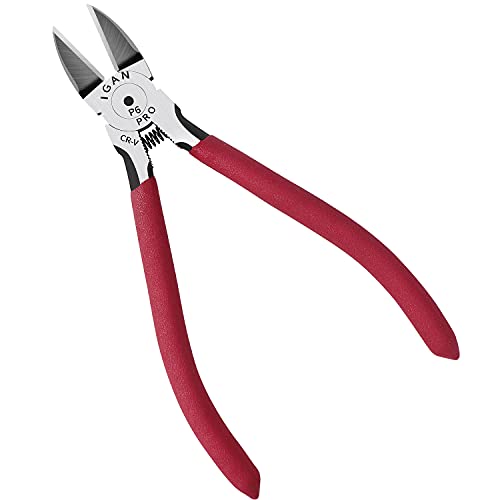
BOENFU Wire Cutters Heavy Duty Snips Flush Cut Side Cutters Pliers
$7.99 Check pricePrices change often - PEASUG
Deburring Tool with 12 HSS Blades for Metal Resin PVC 3D Print
$9.99 Check pricePrices change often - KLEIN TOOLS
Klein Tools D275-5 Diagonal Flush Cutting Pliers, 5-Inch
$12.97 Check pricePrices change often


Common questions
How much does PETG shrink?
Typically about 0.4 percent, with a normal range of 0.2 to 0.6 percent depending on brand, part geometry and how warm the chamber is. On a 200 mm feature that is roughly 0.8 mm. Warmer chambers generally shrink less, because the part cools from a smaller temperature difference.
Should I compensate in CAD or in the slicer?
For a one off, scaling in the slicer is quickest and leaves the model untouched. For a part you will print repeatedly, build the compensation into the CAD so the file is correct anywhere and keep the slicer at 100 percent. Mixing both is the reliable way to end up with a part compensated twice and oversized.
Does this apply to holes?
Not directly, and confusing the two is common. Holes print undersized mainly because a circle is approximated by straight segments and the extruded line pushes inward on a concave curve, which is a geometry effect rather than a thermal one. Use a horizontal expansion or hole compensation setting for holes, and a scale factor for overall dimensions.
Why does the same filament shrink differently on two machines?
Chamber temperature is the largest factor. A part printed in a warm enclosed chamber cools slowly and from a smaller temperature difference, so it shrinks less than the same file on an open machine in a cold room. That is also why a measured figure from your own setup is worth more than any published typical value.